



Every day a commercial truck sits idle can cost your business between $1,500 and $2,000 in lost revenue. For fleet managers and owner-operators alike, keeping trucks on the road is the difference between profit and loss. Yet, unplanned breakdowns remain one of the most common and expensive disruptions in the trucking industry, often stemming from deferred maintenance that could have been prevented.
This guide provides everything you need to maintain a commercial truck effectively, from maximizing uptime and ensuring driver safety to reducing long-term repair costs. Explore the framework needed to keep your fleet running reliably and comply with federal regulations.
Implementing an Effective Commercial Truck Maintenance Program
Effective maintenance starts with a clear, frequency-based plan. The following commercial truck maintenance checklist provides a comprehensive framework for any fleet manager or owner-operator looking to maintain a semi truck systematically and reduce the risk of unexpected failures.
Daily Pre-Trip Inspections
Daily pre-trip inspections are your first line of defense against violations and breakdowns, and align with the DOT pre-trip inspection requirements to help you catch problems before they become roadside emergencies. Before every trip, drivers should perform the following checks to ensure the vehicle is road-ready:
- Fluid levels: Check engine oil, coolant and windshield washer fluid for proper levels.
- Tires: Inspect pressure and tread depth on all tires, including spares.
- Lights: Test headlights, taillights, turn signals, brake lights and clearance lights for proper function.
- Brake system: Verify air pressure levels and listen for air leaks.
- Mirrors and visibility: Inspect mirrors for cracks or needed adjustments and test the horn.
- Undercarriage inspection: Perform a visual check under the truck for leaks or loose components.
Weekly Checks
Weekly maintenance builds on daily inspections with slightly more in-depth attention. Inspect windshield wipers for wear and replace them if they leave streaks or miss sections of the glass. Mirrors require thorough cleaning to ensure maximum visibility. Battery corrosion can develop at terminals, so check connections to confirm they remain tight and clean.
Conduct a more detailed inspection for leaks by checking under the vehicle after parking it overnight. Look for oil, coolant or fuel spots that might indicate developing problems. Taking just a few extra minutes each week can reveal developing issues that daily inspections might miss.
Monthly and Mileage-Based Service
Different maintenance tasks follow different schedules. The right interval depends on your specific truck, engine type and duty cycle. Always consult your manufacturer’s guidelines for precise service intervals. Some of the most critical mileage-based services include:
- Oil and filter changes: Follow manufacturer recommendations to maintain engine health and performance. A critical service like an oil change typically occurs every 15,000-25,000 miles, depending on your engine and duty cycle.
- Fuel filter replacement: Check your OEM schedule for recommended intervals. Regular replacement prevents contaminants from reaching the engine and causing damage.
- Chassis lubrication: Ensure moving parts operate smoothly and reduce wear on steering and suspension components by following your truck’s lubrication schedule.
- Air filter inspection: Keep the engine running efficiently by inspecting and replacing air filters according to manufacturer specifications.
- Brake maintenance: Prevent costly failures by properly maintaining your braking system through regular adjustments and inspections.
Annual and In-Depth Inspections
Annual DOT inspections are required under federal vehicle maintenance regulations. These comprehensive inspections cover all critical systems, including the engine, transmission, suspension, steering components and electrical systems. Brake performance must be tested and documented. Frame and body components are examined for cracks, damage or excessive wear.
Annual inspections also include checking exhaust systems for leaks, inspecting the fuel system for integrity and verifying that all required safety equipment is present and functional. Proper documentation of these inspections is essential for compliance and provides a detailed record of your vehicle’s condition over time.
Why a Preventive Truck Maintenance Guide Is Nonnegotiable
A checklist only delivers value when you understand the business reasons behind it. Preventive maintenance directly impacts your bottom line, your team’s well-being and your legal standing.
Reduce Downtime and Lower Repair Costs
The financial case for preventive maintenance is clear — with unplanned vehicle downtime costing thousands of dollars per day in lost productivity and revenue. Emergency repairs compound these losses, typically costing 3–4 times as much as preventive service:
- Premium labor rates: Emergency service calls command higher hourly rates than scheduled appointments.
- Expedited parts and shipping: Overnight or same-day delivery fees can double or triple the cost of parts.
- Towing and recovery: Moving a disabled truck to a repair facility adds hundreds of dollars in additional expense.
- Lost revenue: Every hour the truck sits idle represents deliveries you can’t make and income you can’t recover.
Improve Fleet Safety and Protect Drivers
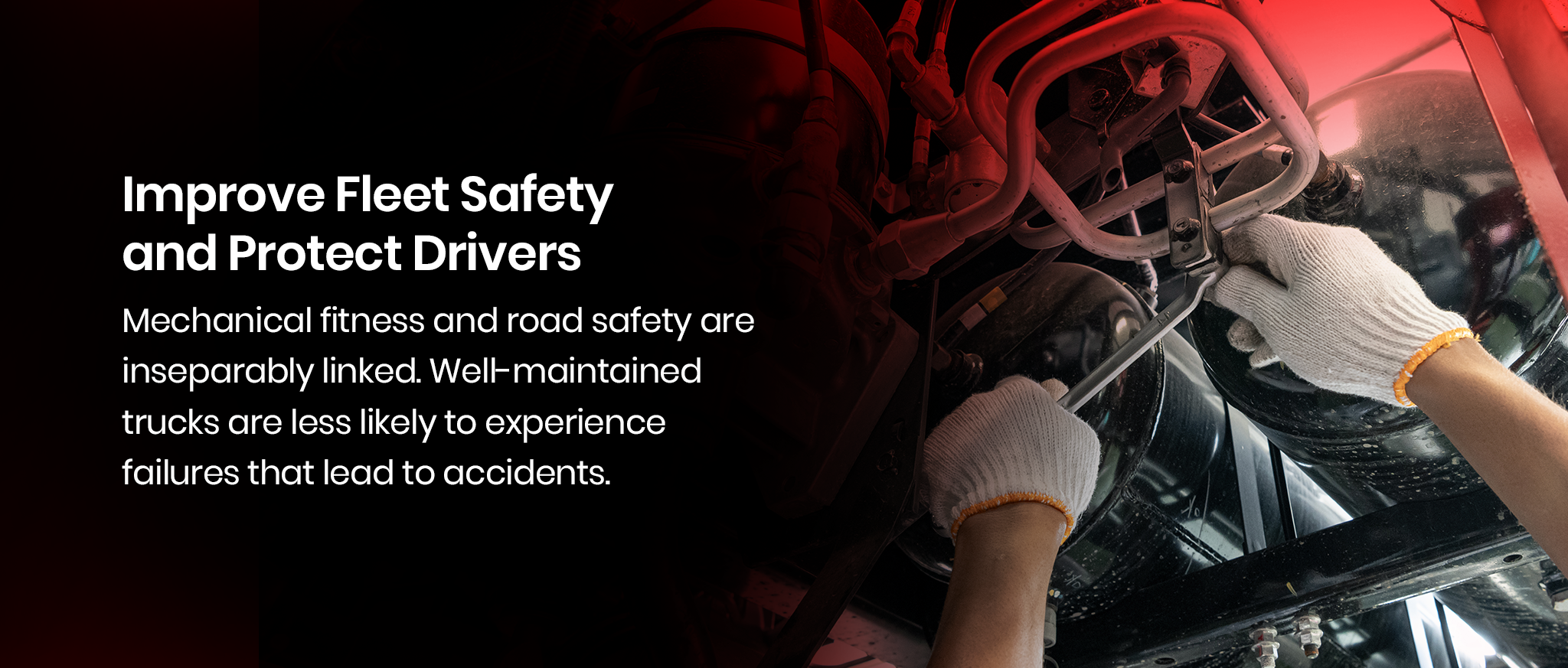
Mechanical fitness and road safety are inseparably linked. Well-maintained trucks are less likely to experience failures that lead to accidents. According to the Federal Motor Carrier Safety Administration (FMCSA), there were 5,476 fatal crashes involving large trucks or buses in 2022. Vehicle maintenance issues, particularly brake and tire issues, consistently rank among the top out-of-service violations during roadside inspections.
Regular maintenance keeps braking systems responsive, ensures steering components function correctly and prevents tire failures that can cause loss of control. Investing in preventive maintenance protects the well-being of your drivers and everyone sharing the road with them.
Stay Compliant With DOT and FMCSA Regulations
A documented maintenance program is legally required and a smart business practice. The federal requirements for vehicle maintenance under 49 CFR Part 396 mandate that motor carriers systematically inspect, repair and maintain all commercial vehicles under their control.
Consistent maintenance helps you avoid violations during roadside inspections and annual reviews. Proper documentation demonstrates your commitment to compliance and protects your business during audits. Failure to maintain adequate records can result in fines, out-of-service orders and increased insurance costs.
3 Common Commercial Truck Maintenance Challenges
Even with a solid plan in place, real-world challenges can disrupt your maintenance routine. Here’s how to address the most common obstacles fleet managers and owner-operators face.
1. Managing Unscheduled Repairs and Roadside Breakdowns
Despite your best efforts, unexpected breakdowns can happen. The key is minimizing their impact on your operation. By bringing repairs directly to your location, mobile service eliminates the wait for towing and service bay availability. It reduces downtime and gets drivers back on the road faster.
Having a trusted partner who offers mobile repair services can mean the difference between a few hours of delay and an entire day of productivity lost.
2. Sourcing High-Quality Parts Without Delay
Maintenance quality depends entirely on the parts you use. Substandard components might cost less initially but fail prematurely, leading to repeat repairs and extended downtime. Equally problematic is waiting days for the right part to arrive while your truck sits idle.
Establishing a relationship with a reliable parts supplier ensures you have access to genuine manufacturer parts when you need them. Access to high-quality truck parts with fast delivery or same-day pickup eliminates unnecessary delays and keeps maintenance on schedule.
3. Keeping Accurate and Actionable Maintenance Records
Documentation serves two essential purposes — regulatory compliance and fleet health tracking. Accurate records allow you to identify patterns, such as recurring issues with specific vehicles or components that fail prematurely. This information helps you make informed decisions about repairs versus replacement and supports warranty claims when applicable.
Consistency matters. You must document every service, repair and inspection with dates, mileage, parts used and technician notes. A trusted service partner can help maintain these records as part of their ongoing support.
Get Proactive Support With Campbell Supply Company
Building a strong maintenance guide for commercial trucks is one thing — executing it consistently is another. That’s where Campbell Supply Company comes in. With seven convenient locations across New Jersey and New York, we provide comprehensive commercial vehicle services that help you stay ahead of breakdowns. Our ASE-certified technicians deliver expert diagnostics, preventive maintenance and mobile repair services that bring solutions directly to you.
Whether you need emergency repairs or access to high-quality parts with fast delivery, we’re here to support your operation. Partnering with Campbell Supply Company means joining a family of professionals committed to keeping your trucks running and your business moving forward.
Explore our commercial vehicle services or schedule your next service online today.